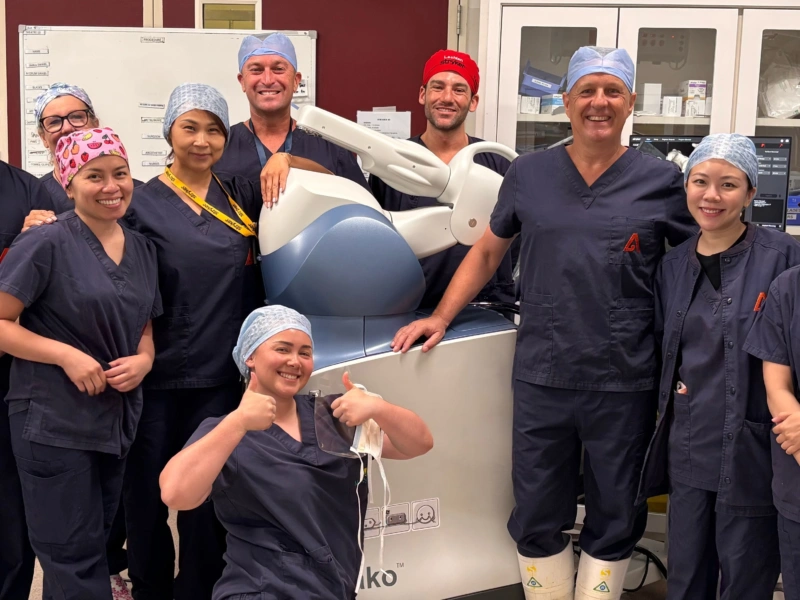
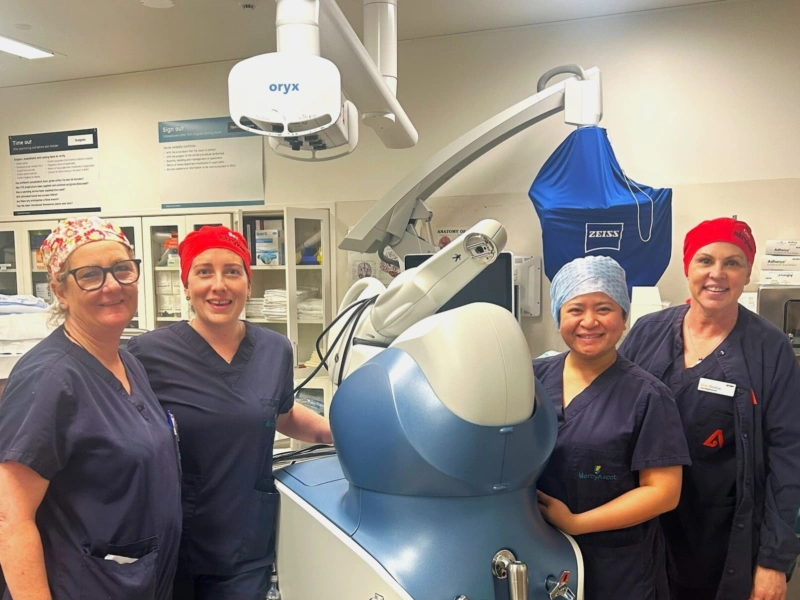
Allevia Hospitals is proud to announce the addition of two advanced Mako® robotic systems – Mako 4 and Mako 3.11 – to its growing fleet of surgical robotics. These systems will enhance orthopaedic capabilities at both hospitals in Epsom and Ascot, supporting surgeons in delivering more precise and personalised knee, hip and shoulder replacement procedures.
3 minute read
The first surgery using the new Mako system – a knee arthroplasty – was performed on is 17 October at Ascot Hospital, marking a significant milestone in Allevia Hospitals’ commitment to innovation and excellence in patient care.
Enhancing precision, accelerating recovery
The Mako® system empowers surgeons with enhanced planning tools and robotic precision, allowing for more accurate procedures1 and reduced soft tissue damage compared to traditional manual techniques. 2,3 This technology not only improves surgical outcomes but also contributes to faster recovery times. Patients undergoing Mako-assisted surgery typically reach postoperative goals sooner and are discharged home earlier than those treated with manual methods. 4 Long-term results are equally promising, with physical function scores remaining favourable even three years post-surgery. 5
A comprehensive robotic ecosystem
The addition of Mako 4 and Mako 3.11 complements Allevia Hospitals’ existing suite of robotic technologies, which includes:
- VELYS™ Robotic-Assisted Solution – for knee replacement surgeries
- ROSA® Robotic Surgical Assistant – for total knee replacement
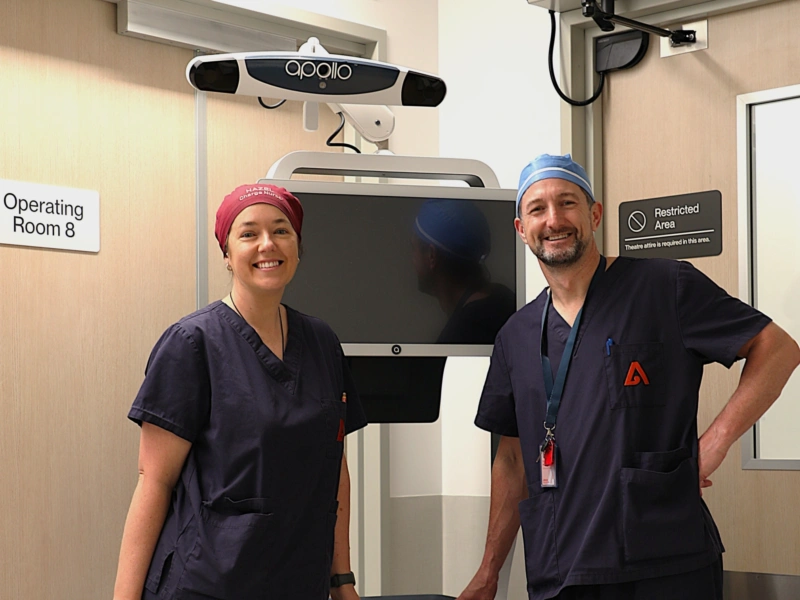
- Corin ApolloHipX™ – for hip and knee replacement procedures
- Da Vinci Xi® Surgical System – for minimally invasive surgery across multiple specialties
This diverse and advanced robotic ecosystem positions Allevia Hospitals at the forefront of surgical innovation in New Zealand.
Leadership in innovation
“At Allevia Hospitals, we’re committed to continually expanding our portfolio of advanced surgical technologies,” says Dr Ian England, CEO. “Investing in robotics technology not only improves outcomes for our patients – it also helps us attract top surgical talent from across the country.”
With this expansion, Allevia Hospitals reinforces its role as a leader in robotic-assisted surgery, delivering world-class care and pioneering the future of orthopaedics.
References:
- Lewis PL, Gill DR, McAuliffe MJ, McDougall C, Stoney JD, Vertullo CJ, Wall CJ, Corfield S, Du P, Holder C, Harries D, Edwards S, Xu A, Lorimer MF, Cashman K, Smith PN. Hip, Knee and Shoulder Arthroplasty: 2024 Annual Report, Australian Orthopaedic Association National Joint Replacement Registry, AOA: Adelaide, South Australia. 2024.
- Kayani B, Konan S, Pietrzak JRT, Haddad FS. Iatrogenic Bone and Soft Tissue Trauma in Robotic-Arm Assisted Total Knee Arthroplasty Compared With Conventional Jig-Based Total Knee Arthroplasty: A Prospective Cohort Study and Validation of a New Classification System. J Arthroplasty. 2018;33(8):2496-2501. doi:10.1016/j.arth.2018.03.042
- Fontalis A, Kayani B, Asokan A, et al. Inflammatory Response in Robotic-Arm-Assisted Versus Conventional Jig-Based TKA and the Correlation with Early Functional Outcomes: Results of a Prospective Randomized Controlled Trial. J Bone Joint Surg Am. 2022;104(21):1905-1914. doi:10.2106/JBJS.22.00167
- Kayani B, Konan S, Tahmassebi J, Pietrzak JRT, Haddad FS. Robotic-arm assisted total knee arthroplasty is associated with improved early functional recovery and reduced time to hospital discharge compared with conventional jig-based total knee arthroplasty: a prospective cohort study. Bone Joint J. 2018;100-B(7):930-937.doi:10.1302/0301-620X.100B7.BJJ-2017-1449.R1
- Marchand RC, Scholl L, Taylor KB, et al. Clinical Outcomes after Computed Tomography-Based Total Knee Arthroplasty: A Minimum 3-Year Analyses [published online ahead of print, 2023 Jan 19]. J Knee Surg. 2023;10.1055/s-0042-1759790. doi:10.1055/s-0042-1759790